L
    LawUpConsulting
    Home
    About
    Practice Areas
    Team
    Insights
    Clients
    Contact
    Get Consultation
    Home
    About
    Practice Areas
    LitigationCorporate LawComplianceBanking & FinanceLabour LawCyber Law
    Team
    Insights
    Clients
    Contact
    Get Consultation
    Back to Insights
    Criminal Law
    June 5, 2025
    7 min read

    Vaibhav v. State of Maharashtra: Supreme Court Cautions Against Overreliance on Circumstantial Evidence

    The Supreme Court overturned a murder conviction citing insufficient circumstantial evidence, emphasizing that prosecution must establish an unbroken chain of circumstances.

    Adv. Vikram Joshi

    Senior Partner, Criminal Law
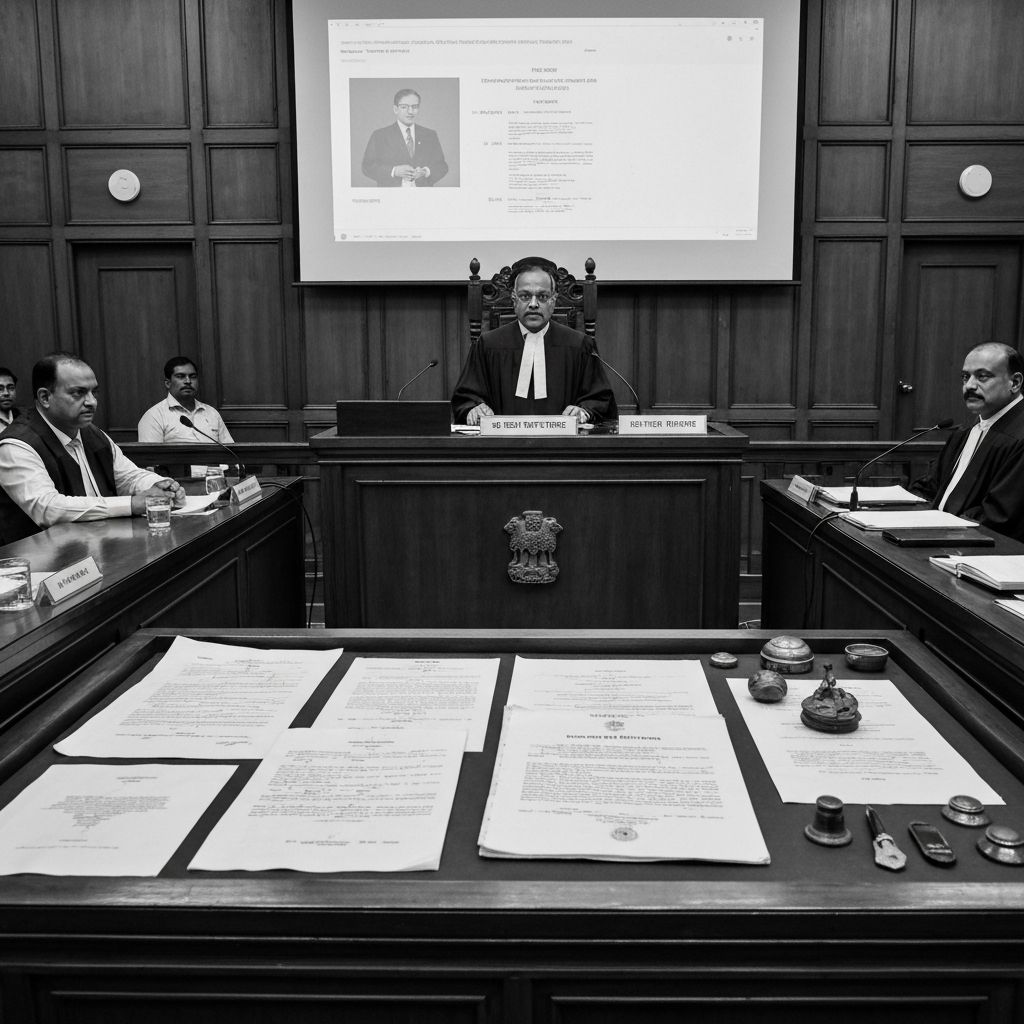
    Vaibhav v. State of Maharashtra: Supreme Court Cautions Against Overreliance on Circumstantial Evidence

    Introduction

    In Vaibhav v. State of Maharashtra (2025 INSC 800), the Supreme Court overturned the appellant's conviction for murder under Section 302 IPC, delivering crucial guidance on the standards for circumstantial evidence.

    Background

    The case involved the death of the appellant's friend Mangesh, allegedly caused by a gunshot from the appellant's father's service pistol. The conviction was based entirely on circumstantial evidence.

    The Court's Analysis

    • Chain of Circumstances: Prosecution must establish an unbroken chain pointing only to guilt
    • Forensic Evidence: Inconsistencies in bullet trajectory raised reasonable doubt
    • Direct Link: No forensic proof directly linked the accused to the firing

    Standards for Circumstantial Evidence

    The Court reiterated the five-fold test for circumstantial evidence: circumstances must be fully established, point only to accused's guilt, be conclusive, exclude every hypothesis except guilt, and form a complete chain.

    Caution to Courts

    This judgment cautions trial courts against mechanical reliance on circumstantial evidence without rigorous application of established legal standards.

    Legal Disclaimer

    This article is for informational purposes only and does not constitute legal advice. The information contained herein may not be applicable to all situations and may not reflect the most current legal developments. Please consult with a qualified attorney for specific legal advice regarding your situation.
    Related Articles

    Imran Pratapgadhi v. State of Gujarat: Supreme Court Quashes FIR, Upholds Freedom of Expression
    Criminal Law

    Imran Pratapgadhi v. State of Gujarat: Supreme Court Quashes FIR, Upholds Freedom of Expression

    The Supreme Court quashed an FIR against a Rajya Sabha MP for reciting a poem, holding that poetry p...

    Adv. Vikram Joshi8 min read
    Vihaan Kumar v. State of Haryana: Supreme Court Reinforces Arrest Rights Under Article 22
    Criminal Law

    Vihaan Kumar v. State of Haryana: Supreme Court Reinforces Arrest Rights Under Article 22

    The Supreme Court declared an arrest illegal due to non-communication of grounds, emphasizing that c...

    Adv. Anita Singh8 min read
    K.P. Tamilmaran v. State: Supreme Court's Landmark Judgment on Honour Killings
    Criminal Law

    K.P. Tamilmaran v. State: Supreme Court's Landmark Judgment on Honour Killings

    The Supreme Court delivered a decisive verdict on honour killings, clarifying the evidentiary value ...

    Adv. Suresh Gupta8 min read
    L
    LawUp
    Consulting

    Premier legal services delivering strategic counsel with unwavering commitment to integrity and client success across India.

    +91-9057777099support@lawup.in
    C/o Ravi Kumar Sharma, Rajasthan High Court Jaipur, Rajasthan - 302005

    Practice Areas

    • Litigation
    • Corporate Law
    • Banking & Finance
    • Cyber Law
    • Labour Law

    Company

    • About Us
    • Our Team
    • Insights
    • Careers
    • Contact

    Legal

    • Privacy Policy
    • Terms of Service
    • Disclaimer

    Connect

    Bar Council of India Disclaimer: This website is for informational purposes only and does not solicit or advertise work. The contents do not constitute legal advice.

    Powered by RKS

    © 2025 LawUp. All rights reserved.